
Industrial Roof Crack Repair & Waterproofing, Manufacturing Facility, Hyderabad
- Completed August 2026
- Client name withheld per confidentiality
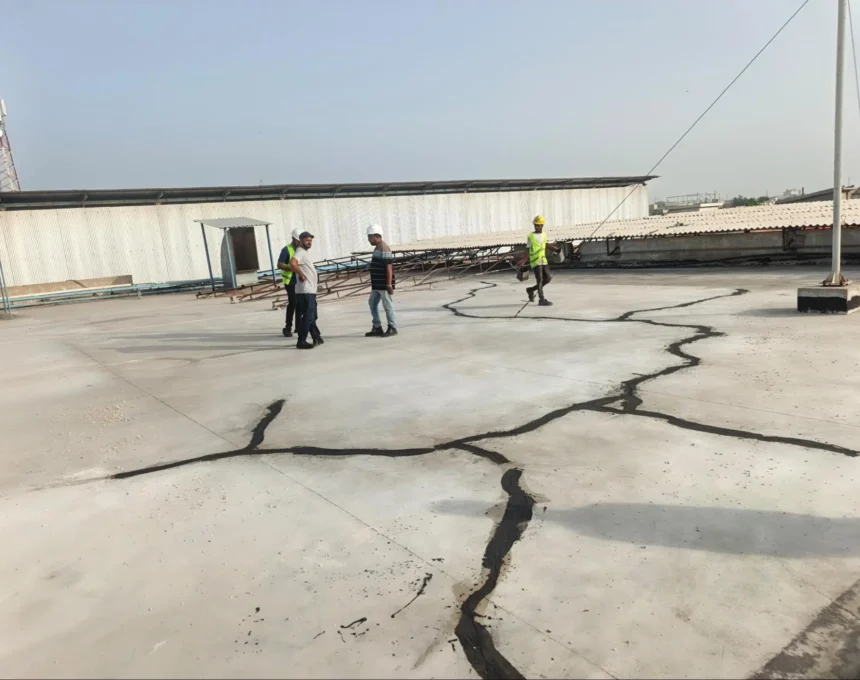
A 29,500 sq ft factory roof was leaking through cracks up to 25mm wide, after repeated cement patching had failed to hold. Concrete Surgeons carried out a full site assessment, repaired the cracks with an SBR-bonded, non-shrink grout system, and waterproofed the entire roof — completed in 7 working days without stopping production.
29,500 sq ft
Roof Area
10–25 mm
Crack Width
7 Days
Execution
0 Hours
Shutdown
Project at a Glance
Location | Hyderabad, Sindh, Pakistan |
Property Type | Manufacturing facility |
Roof Area | 29,500 sq ft |
Problem | Recurring water ingress through a cracked concrete slab |
Crack Width | Approx. 10–25 mm |
Previous Repair Attempt | Cement patching (repeated, unsuccessful) |
Repair System | Crack preparation + SBR bonding + Grout G3 + roof-wide waterproofing |
Execution Time | 7 working days |
Production Shutdown | None |
Completed | August 2026 |
Client | Confidential manufacturing facility |
Contractor | Concrete Surgeons |
The Challenge
The cracks weren’t a cosmetic issue. During heavy rain, water was tracking through the slab and dripping directly onto sections of the production floor, some of it near active machinery.
The client had already tried the standard fix: filling the cracks with ordinary cement. It held for a while after each application, then opened up again with the next round of rain.
As general context: cracks of this width left untreated can, over time, allow repeated wetting and drying cycles to reach embedded steel reinforcement a known risk in concrete construction, not a finding specific to this slab.
Site Assessment
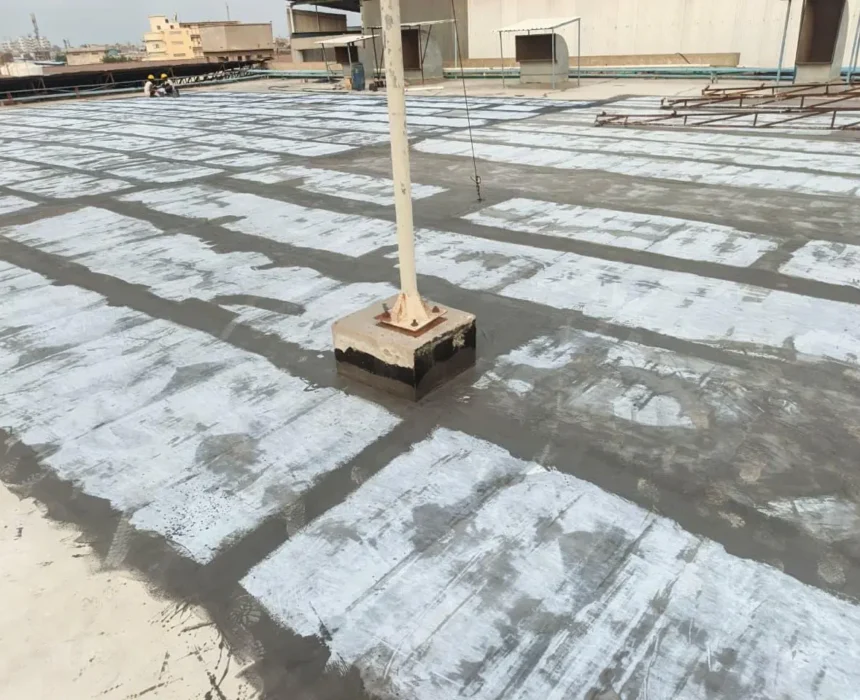
Before any repair work began, the Concrete Surgeons team walked the entire roof rather than treating only the cracks the client had already flagged. Cracks of this size rarely occur in isolation, and a repair scoped only to the reported problem areas tends to miss the ones that surface the following season.
The assessment covered the full extent and pattern of cracking across the slab, the condition of the existing cement patches, and the general state of the concrete surface. The team documented the crack pattern across the roof before defining the repair scope, treating the roof as one system, not a list of individual cracks to patch one at a time.
Why the Previous Repair Didn’t Hold
As general practice in concrete repair, a cement patch applied without cutting the crack into a proper channel, cleaning it out, and bonding it first tends to sit loosely against the old concrete — and is more likely to separate again once the slab moves. This is offered as general context on why repeat cement patching commonly fails, not as a site-specific diagnosis of this project.
Previous approach
- Cement patch
- No crack preparation
- Weak bond
- Slab movement
- Slab movement
- Crack reopens
This repair
- Crack opened mechanically
- Debris removed
- SBR bonding
- Non-shrink grout
- Roof-wide waterproofing
- Leakage stopped
Why Repair Instead of Replacement
The assessment did not indicate that full roof replacement was necessary. The damage was concentrated in the cracks themselves rather than the underlying concrete slab as a whole, so a properly executed repair could restore the roof’s waterproofing performance without the cost, downtime, and disruption a full replacement would involve.
This conclusion was based on the team’s on-site visual assessment of the slab and crack pattern, not laboratory or structural load testing.
Operational Constraints
- The factory stayed operational: 7 working days, zero production shutdown.
- Work was sequenced entirely on the roof while manufacturing continued on the floor below
- No shutdown was required at any stage of the project
How the Roof Was Repaired
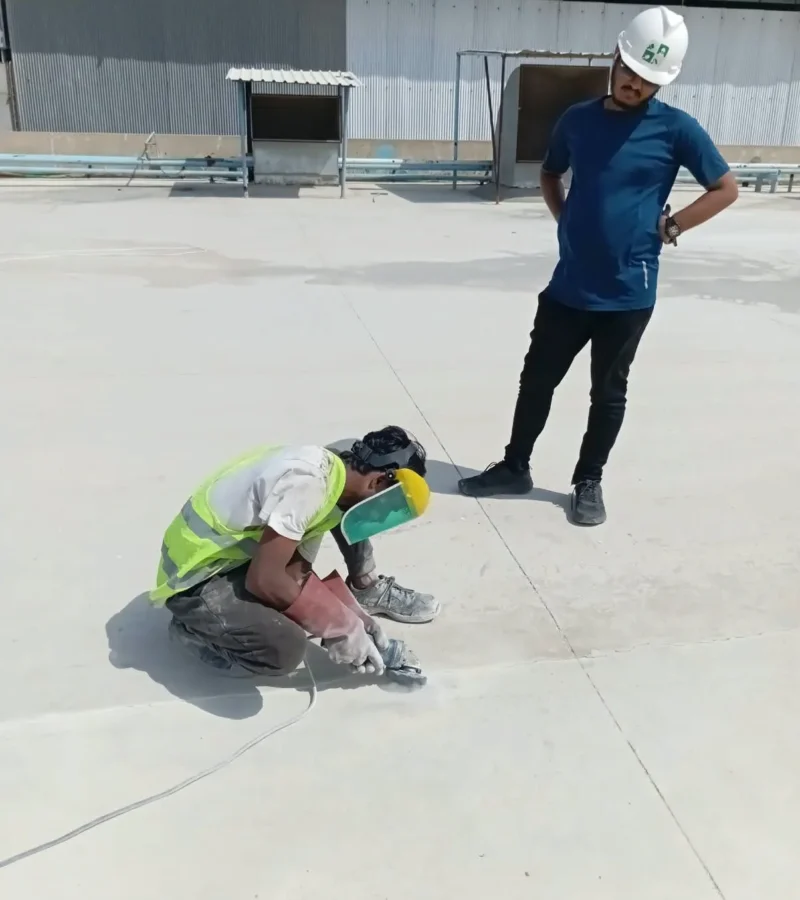
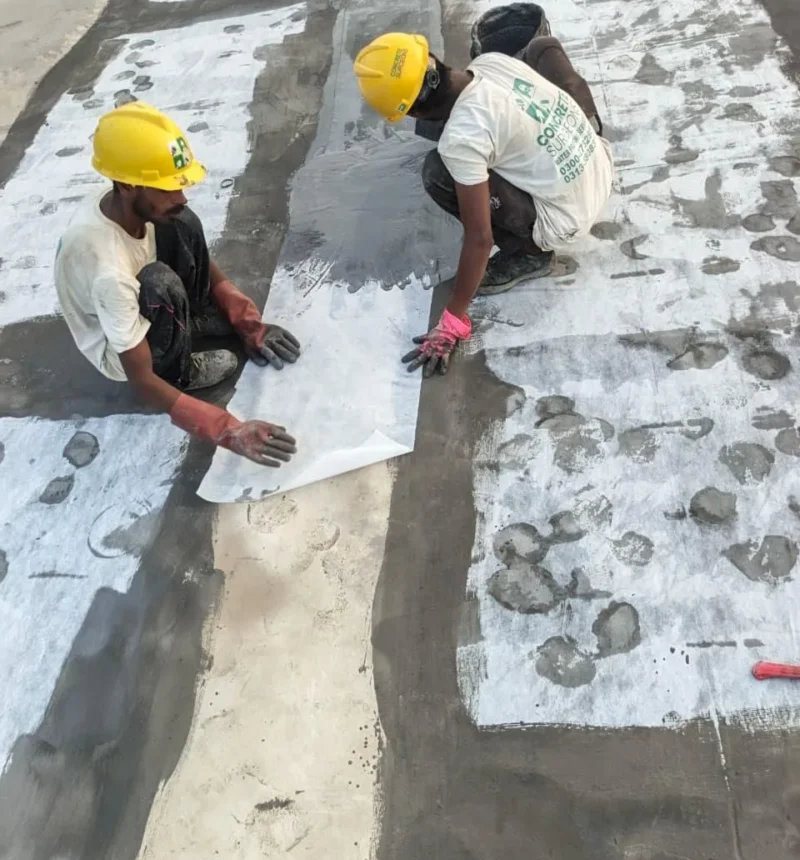
The repair followed five steps, each one addressing a specific reason the earlier patching had failed.
Crack cutting and grooving
Cleaning and debris removal
SBR bonding
Grout G3 filling
Roof-wide waterproofing
Technical Specification
| Crack preparation | Mechanical cutting / grooving |
| Bonding agent | SBR (styrene-butadiene rubber) |
| Crack fill material | Grout G3, non-shrink |
| Waterproofing layer | Concrete Seal-01 (full roof, fabric-reinforced at joints and seams) |
| Roof area treated | 29,500 sq ft |
| Crack width range | 10–25 mm |
| Execution time | 7 working days |
Product data sheet values (compressive strength, coat count, dry-film thickness) are not included here as they weren’t part of the project record used to write this case study.
Results & Impact
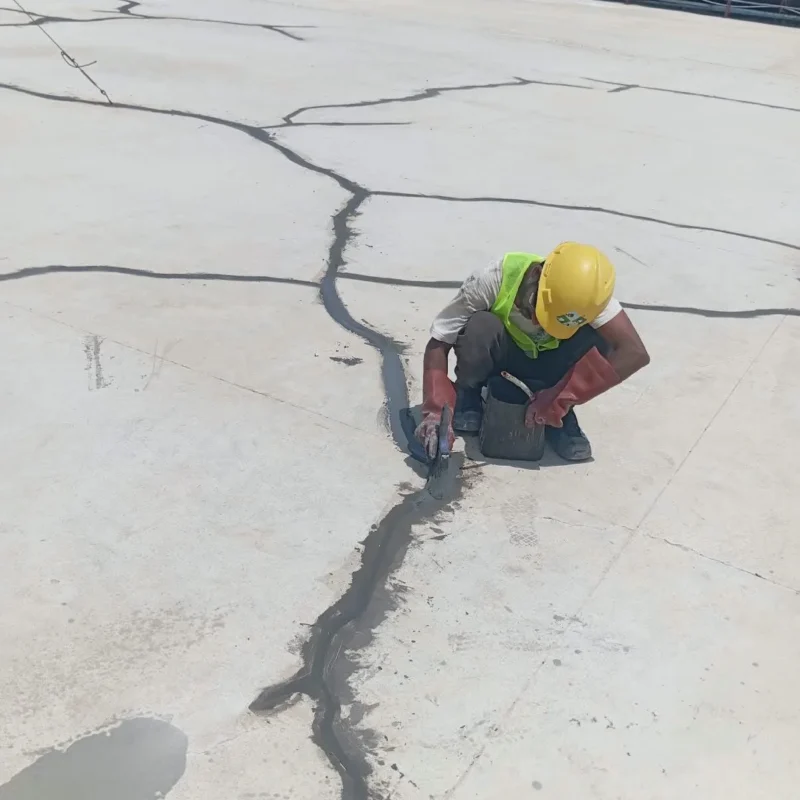
Area Repaired | 29,500 sq ft industrial roof |
Timeline | 7 working days |
Outcome | Cracks addressed during the repair were sealed, with no reported leakage following two subsequent rain spells, according to client feedback |
Operational Impact | Zero production shutdown during the repair |
Approach | Repaired the existing roof rather than pursuing full roof replacement |
Performance note: based on client feedback following the two rain spells; not confirmed by a separate physical follow-up inspection.
“Our factory roof used to leak during the rains. Concrete Surgeons repaired the cracks professionally. Two rain spells have passed since, and there hasn’t been a single drop.”
— Facility Management, Hyderabad
Frequently Asked Questions
Can a factory roof be repaired without stopping production?
When should a cracked concrete roof be repaired instead of replaced?
Why do cement crack repairs fail after monsoon?
How are 10–25mm concrete roof cracks repaired?
How long does industrial roof waterproofing take?
Why Concrete Surgeons
Technical expertise
An experienced team that diagnoses the actual cause of a failure, not just the visible symptom, before recommending a fix.
Quality materials & systems
Reliable construction chemicals and waterproofing systems selected for consistent, long-term performance.
Precision in every project
From surface preparation to final application, the same attention to detail that closed this project without a single production shutdown.
Recurring Leakage at Your Factory or Commercial Facility?
Get the roof assessed before another cycle of patching, leakage, and downtime.